 |
| RequiesCAT in pace, Poppy |
A TV round-up of ‘major events' in
2014 reminded us all of the momentous death at the age of 24 of the world’s
oldest cat (according to the Guinness Book of Records), Poppy the tortoiseshell
from Bournemouth. While I am sceptical, to say the least, that there are not
older living representatives of the species felis
silvestris catus or felis domesticus,
I am now staking a claim to the world record for my parents’ cat
Sheba, born early in 1992. She was once our own cat, and her real name is Gas Board
(her sadly deceased sister was called ‘Lecky’, or ‘Electricity’).
 |
| Gas Board, the oldest cat alive? |
The ancient Greeks had much to say on
the subject of dogs, but information about cats is much harder to find. The
word for cat, aielouros, probably
means ‘twisting tail’; my future as a Professor of Greek was probably
determined when I was eight and asked my father why our tabby was called
Ailoura.
.jpg) |
| Cambyses, the felines' foe |
The most famous cat story in ancient
authors is not about Greece at all: it concerns the Persian emperor Cambyses
insulting the people of an Egyptian city he was besieging. Cambyses did
something unconventional with cats, which the Egyptians of course believed to
be sacred: he probably did not use actually use them as missiles, as some
artists have suggested, but may have carried them in the ranks or painted them
on his men’s shields.
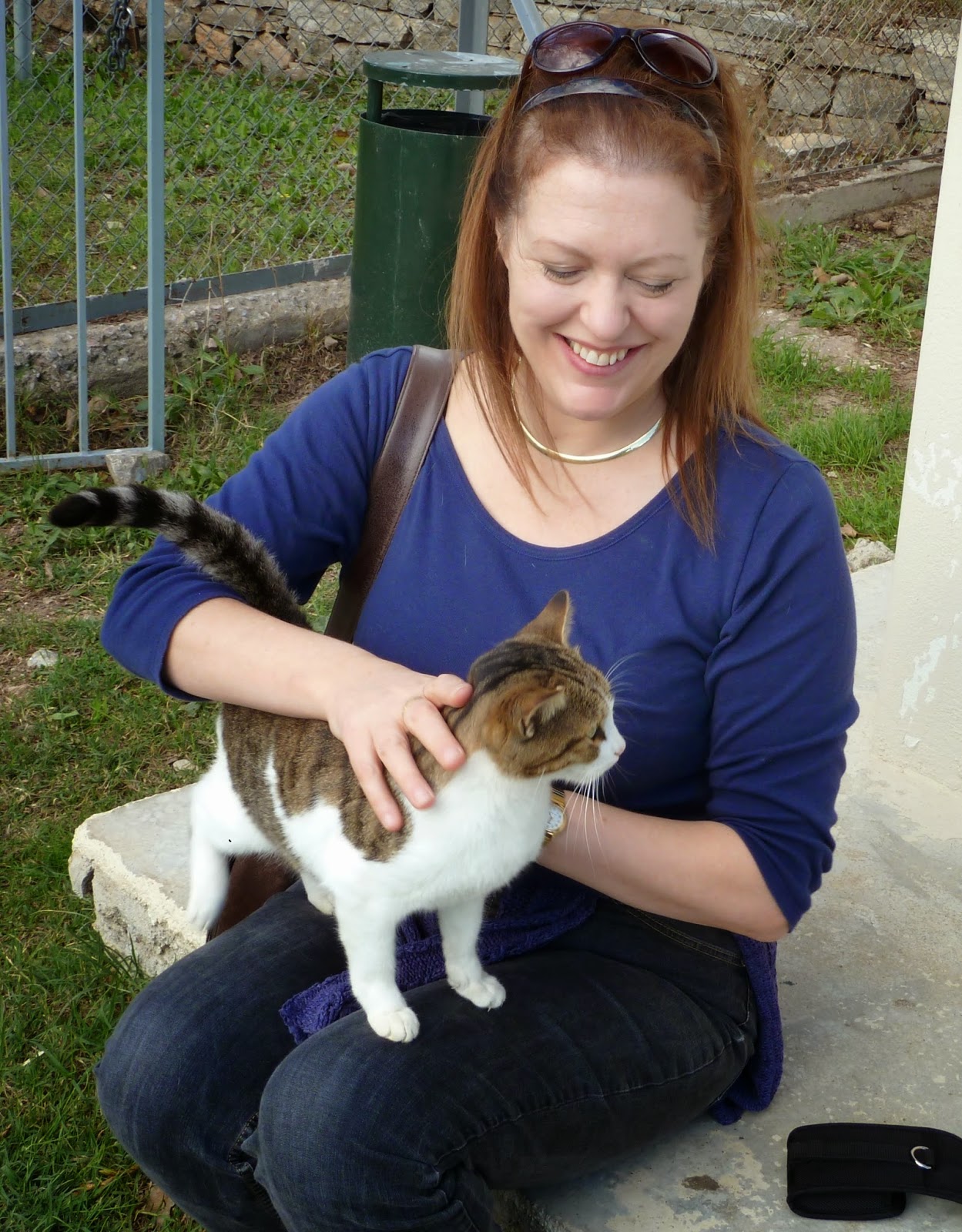 |
| Artemis' Avatar at Vravrona |
In one Greek comedy, the Acharnians of Aristophanes, a pedlar arrives in Athens from central Greece to sell edible flora and fauna, including ‘geese, hares,
foxes, moles, hedgehogs, CATS, martins,
otters and eels.’ When the satyrs in another play are asking about the newly
invented musical instrument, the lyre, which they have heard but not seen, they
ask the nymph of the mountain whether it resembles a cat or a panther.

.jpg) But the untold story of cats in
ancient Greece I am convinced has much to do with temple sanctuaries,
especially those of Artemis, deity of small furry mammals. When I visited the
Athenians’ dazzling sanctuary of Artemis at Brauron (Vravrona), I was met at the gates and
escorted all round it by the vocal young female, the goddess’s avatar, in the photo above. And
then when I researched vases illustrating Artemis’ Black Sea temple at Sevastopol for my book Adventures with Iphigenia, what did I
find but a cat involved in sacred rituals? But nobody has ever explained
exactly what the man holding the cat is doing. Suggestions in the comments
section, please!
But the untold story of cats in
ancient Greece I am convinced has much to do with temple sanctuaries,
especially those of Artemis, deity of small furry mammals. When I visited the
Athenians’ dazzling sanctuary of Artemis at Brauron (Vravrona), I was met at the gates and
escorted all round it by the vocal young female, the goddess’s avatar, in the photo above. And
then when I researched vases illustrating Artemis’ Black Sea temple at Sevastopol for my book Adventures with Iphigenia, what did I
find but a cat involved in sacred rituals? But nobody has ever explained
exactly what the man holding the cat is doing. Suggestions in the comments
section, please!


.jpg)

.jpg)


