Saturday, 30 July 2022

On (Briefly) Returning to KCL and Supervisory Best Practice


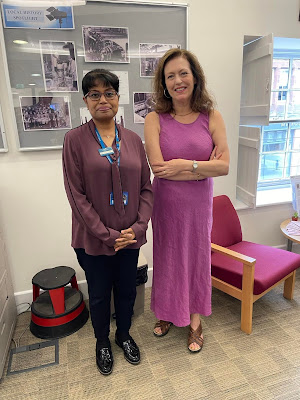
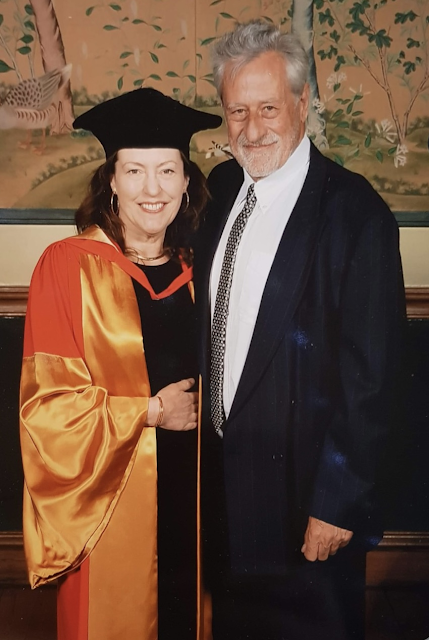
Weird event of the week was attending a King's College London graduation day at the magnificent Royal Festival Hall. Having left this university unnecessarily, under a humiliating cloud entirely of Management making, I was nervous and dragged my husband along to protect me from The Evil Eye. But I soon felt comfortable on meeting some of my favourite former colleagues, whom I miss sorely: Hugh Bowden, Emily Pillinger-Avlamis, and Will Wootton.

With Father of My Children, Who Offered to Bring an Electric Drill for Some Reason
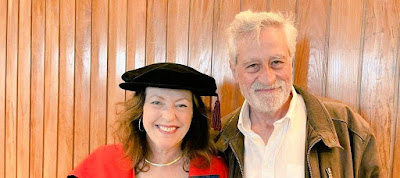
I was there to receive an award for being the best PhD supervisor in Arts and Humanities. There was a fruity irony in one Dean's office deciding to bestow this on me, thanks to the amazing testimonials provided by my lovely PhDs, when another Dean's office was spending hours devising ways effectively to demote me. 
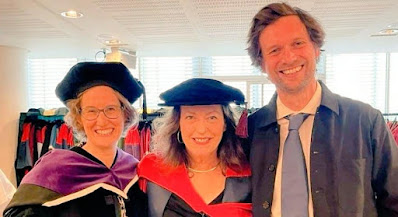
With lovely former colleagues Emily Pillinger-Avlamis and Will Wootton


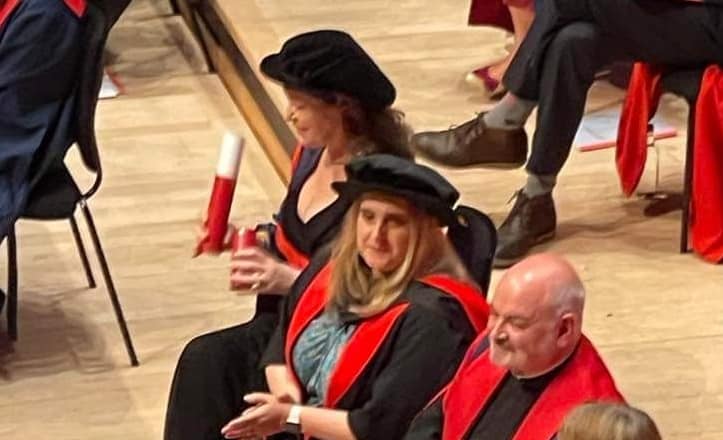
Unfortunately nobody warned me that the tube in which the diploma to be awarded was actually empty, and my husband caught a photo of me staring inside it in some confusion.


I was asked last summer to provide a statement about my supervisory theory and practice to go on the KCL website. Unsurprisingly, it has never been posted, presumably because I do not work for that institution any more. So just in case anybody out there is remotely interested, here is what I wrote:

With Professor Hugh Bowden, Superb Town Crier at the Event

My supervisory practice is founded in the philosophical approach inaugurated by Sara Ruddick’s Maternal Thinking (1989), which emphasises that society needs to shape the care and education of each citizen as a mother does for each of her children. This is supplemented by Aristotle’s belief that every one of us has a potential (dynamis) to be the best possible version of ourselves, but that to fulfil it one needs sensitive and caring support from others.

I try to look after each supervisee from the moment they contact me with a view to studying for a research degree onwards, helping them frame the research question in their applications and exploring their motivation, skillsets and potential to cope with for the long, hard, lonely effort that writing a dissertation entails. I try discreetly to discover how well they are supported financially and emotionally in order to shape advice and support to their individual needs and make them feel confident and welcome.

The reference works in Classics are numerous and extremely complicated to use. Students, especially from unconventional backgrounds, are often intimidated by them. When supervision commences, I introduce supervisees physically to the library and online research tools they will need, advise on key mailing lists, societies and online communities to enrol in, and introduce them to all my other current PhD students in order to encourage mutual advice networks.

Clarity in terms of expectations and timetabling are crucial. Together we often create a paper diagram with optimal dates (receipt of written assignments, supervisions, first draft of thesis plan, doxography, upgrade, research trips, receipt of first full draft, selection of examiners). This is then adapted as necessary across the months and years.

The single biggest challenge intellectually is turning a research topic into an over-arching research question. This needs to be formulated as a ‘why’ or ‘how’ question, rather than a ‘what’ question (the last of which tends to elicit empirical and descriptive lists rather than analytical writing). I never cease emphasising the principle that every page of the thesis must be geared towards answering that question and that any excursuses need justifying.

In feedback, kindness and constructiveness are essential; intellectual confidence is a fragile thing. I try to find something to praise in every piece of writing and guide supervisees’ thought processes by Socratic questioning rather than flat criticism which tends to shut down discussion. I recommend the close study of the way in which scholars write when supervisees say they admire it, in order for them to discover for themselves what makes a convincing and elegant academic style. I hold ‘live’ rehearsals when they are to deliver papers at conferences or attend interviews and work with them to improve the clarity, brevity, and enjoyability of their oral performances.


But the most important aspect of the supervisor’s relationship with graduate students is that it is quasi-parental, even where the supervisee is considerably older than the supervisor. I make it clear that I am happy to help at any time with personal difficulties, observe the strictest confidence protocols, and always ask at the beginning of supervisions how students are doing/feeling in general. I look out for opportunities for them to deliver papers, publish, and network and train them in how to do it for themselves. The point is to give them an intellectual tractor of their own rather than a few years’ sustenance.


Finally, I do everything I can to ensure that supervisees pursue successful careers or life goals when they finish: I allocate an afternoon a week to reference writing. With the most academically ambitious, I hold joint conferences and train them in co-editing published volumes. I have been consultant on their theatrical productions and have helped them publish their dissertations as monographs or series of articles. I continue to meet them regularly either in person, often on theatre trips, or virtually for the rest of our lives. A PhD student is for life, not just for a PhD.   


Sunday, 17 July 2022

Ancestral Suicide, the Ancient Greeks, and Me.
Edwardian Dunbar


I've needed for some time to find out more about my mother's family. She died in 2016, but had refused to talk much about her own mother, who killed herself almost exactly 50 years after her father, my great-grandfather, had taken his own life.

When I first read a Greek tragedy, at 16 years old, I was immediately fixated by the idea of families afflicted by curses handed down over generations. Sometimes I think the  trajectory of my entire working  life was determined by the shadows hanging over my matrilineal descent.


First we went to Dunbar, a beautiful seaside town on the south coast of the Firth of Forth, once a popular vacation resort in the days before package holidays to the Mediterranean. We were looking for Seafield Pond, where my great-grandfather, Robert Nicol Masterton, was found drowned in August 1912. It is a beautiful spot, right by the sea, once a quarry. 


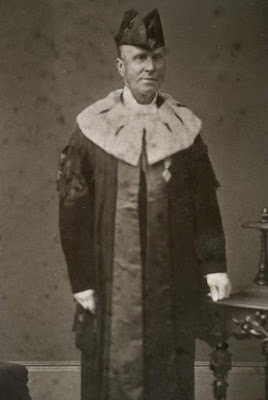
With the help of my husband Richard Poynder and brilliant local archivists Hanita Ritchie and Pauline Smeed, we discovered that Robert was a well-respected officer of the Burgh, Inspector of the Poor. He was in his fifties and had bought a fine Dunbar house for his wife and four children, now in early adulthood. He had risen socially through his marriage to the daughter of the local Provost (Mayor), my great-great-grandfather John Kellie Keir.


John Kellie Keir


Robert’s death caused a huge disturbance in the community as well as his family. Although depression is undoubtedly in this line of DNA, and he fought very hard for more funds to alleviate poverty, nobody knows what drove him to suicide. The shock in the local news reports is palpable.


Edith Masterton in 1913

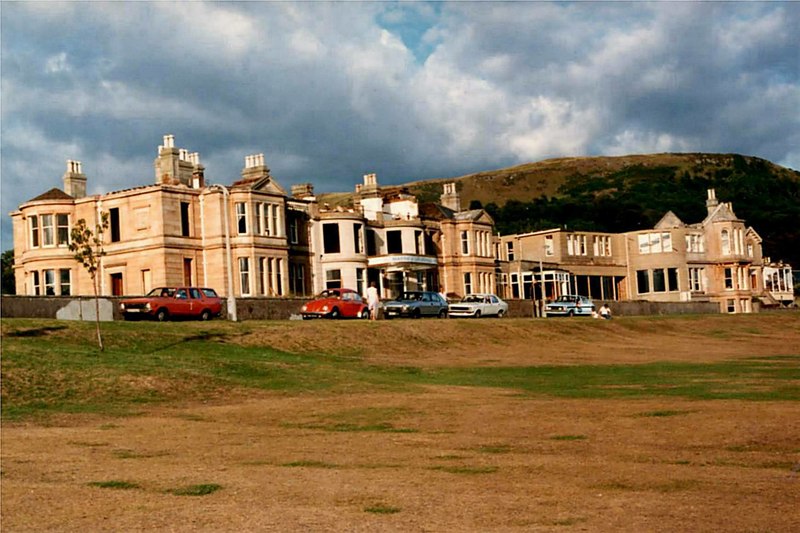
We crossed Scotland to the coast of Ayrshire, where my grandmother Edith Henderson (born Masterton), who had been devastated by her father’s death when she was  a suffragette undergraduate at Edinburgh, threw herself from a hotel window in Largs on October 1st 1962. The hotel has since been demolished, but its precise setting, right by the sea, is oddly similar. 


Marine and Curlighall Hotel, Largs, c. 1983


My mother receiving the news of this catastrophe by phone in Nottingham is my earliest memory. Her adamant silence about it subsequently, besides expressing regret she had called me after her mother, was a symptom I believe of her deep pain. Her mother Edith had suffered from lifelong depression, an unhappy marriage, no occupation for her excellent brain and the death of a baby. Her suicide had long been imminent.


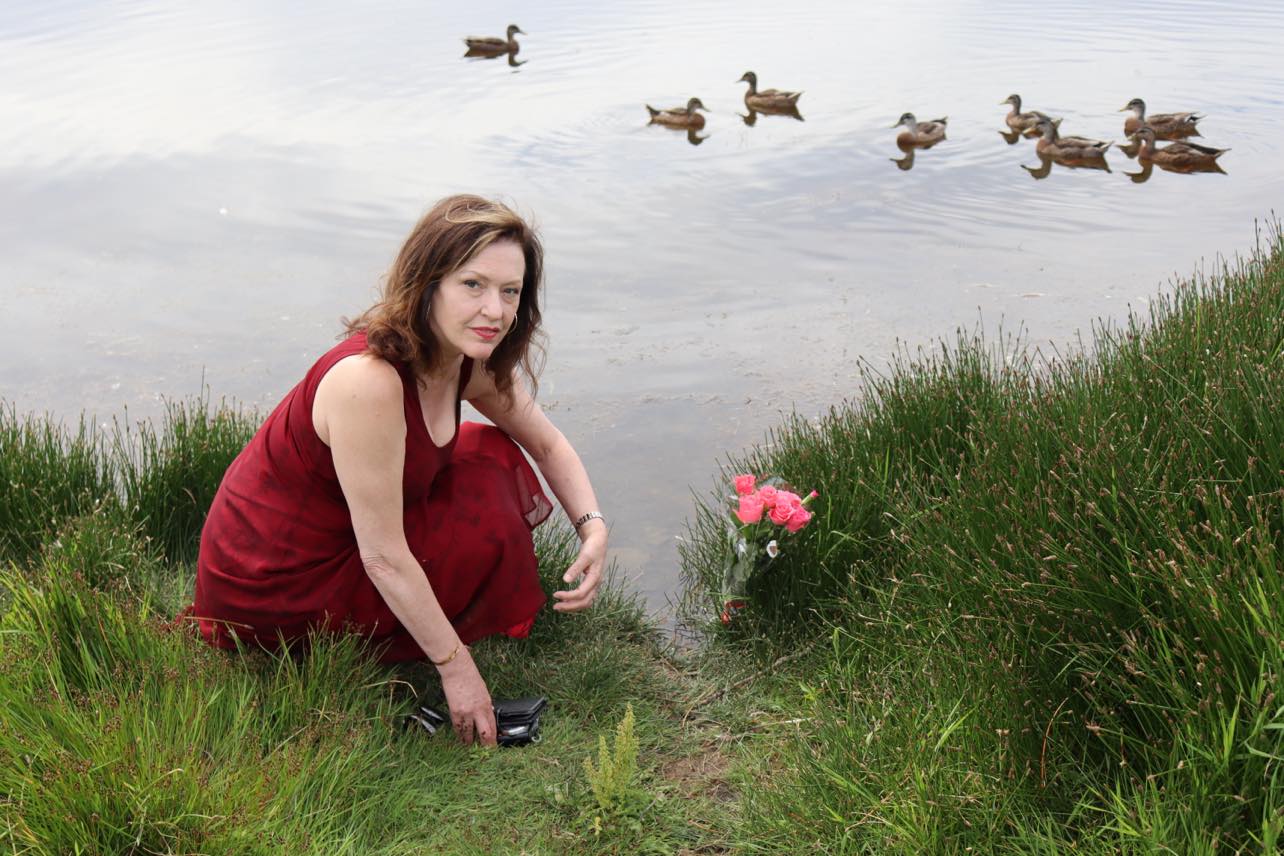
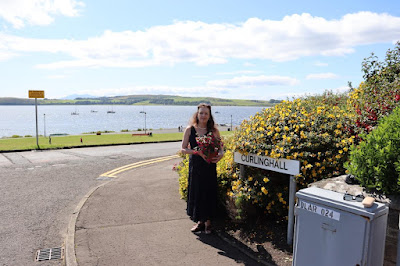
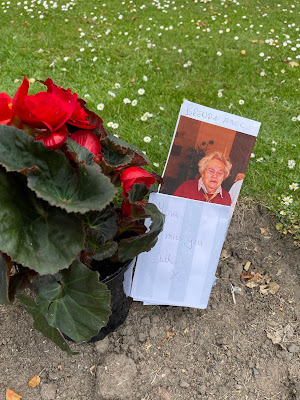
This round-trip enabled me finally to visit the crematorium in Kirkcaldy where my own mother’s funeral ceremony took place in 2016. For reasons too painful yet to make public I had not attended it. The waves of peace washing over me after leaving flowers at all three places have brought me an unexpected amount of relief.


I write this not to elicit pity, which would be misplaced, nor (I hope) to be self-indulgently morbid. There are still taboos around suicide and depression, and the utter silence about this history in my family has always disturbed me. More importantly, I believe that the trauma caused by suicide leaves profound intergenerational scars which can never be healed without investigating and addressing the truth. 

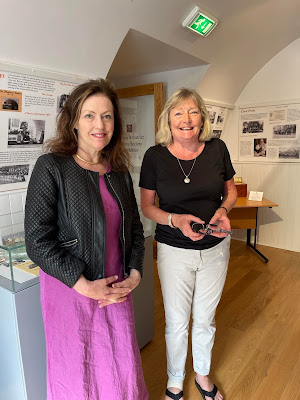
With Hanita Ritchie at the John Gray Centre, Haddington


I hope to write a book about how the extraordinary suicide narratives in Greek tragedy, and the arguments against suicide in Aristotle, have helped me to a better understanding of these things. But for now, I’m just feeling thankful to those archivists and my amazing husband with his car and camera and humour and enjoying an unprecedented sense of psychic calm.


With Pauline Smeed of the Dunbar Local History Society


Thursday, 30 June 2022


For once I’m speechless. It’s Thursday lunchtime and in the last 330 hours I have talked publicly about 7 different ancient Greek topics and one Roman one. Conference season is always exhausting, but this year, with relaxation of Covid restrictions, has been exceptional.


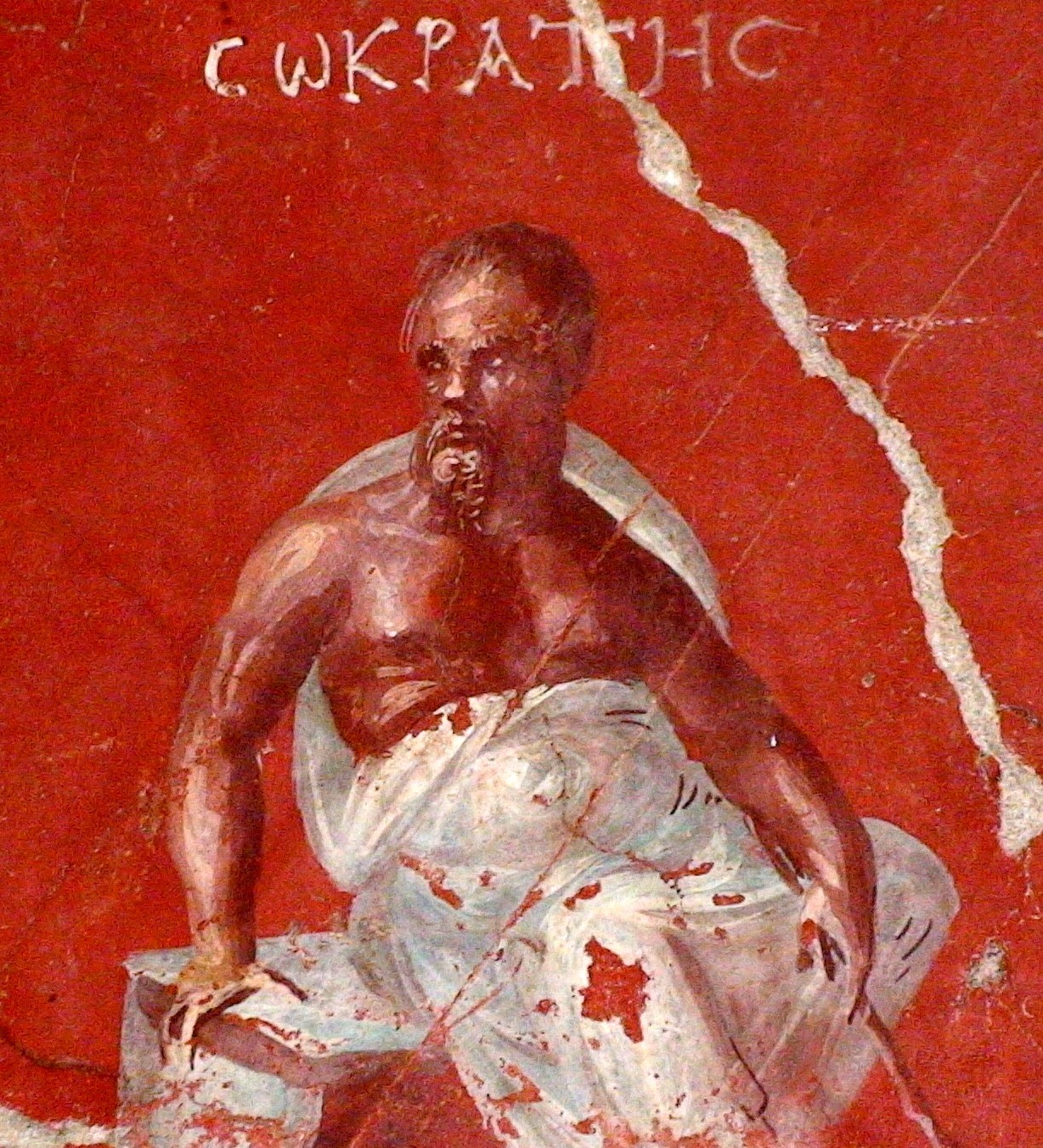
First up was a paper at a Durham conference on the image of the intellectual in antiquity. I pointed out that at the time of Aristophanes’ Clouds Socrates was only in his forties, famous for particularly thuggish performances as a hoplite,  and therefore probably played by his actor as muscular, violent and domineering rather than a geriatric sage.


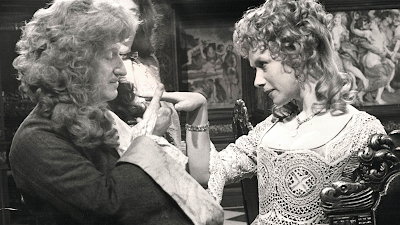
Next was an extraordinary version of Terence’s Latin comedy Eunuchus by the libertine Restoration playwright Charles Sedley, revived on ITV in the 1970s with Helen Mirren in the starring role. The seedy plot about a man dressed as a eunuch raping a teenaged female is wholly unedifying but the wisecracking is polished. This was an Oxford conference in association with the Archive of Performances of Greek & Roman Drama I co-founded long ago.


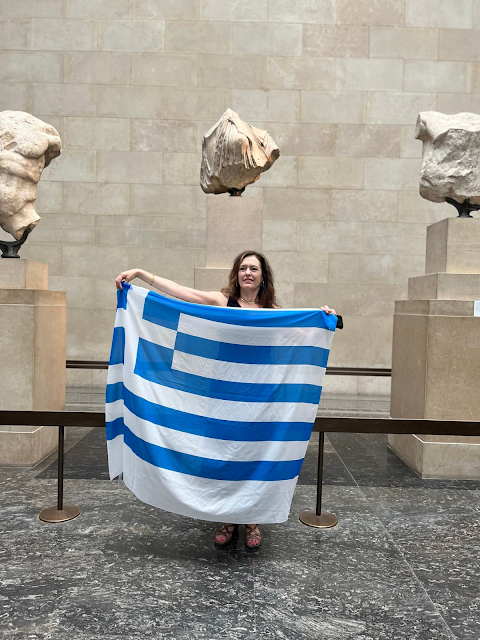
From Oxford I hastened to the British Museum to add my voice, as member of the British Committee for the Reunification of the Parthenon Marbles, to a mass chorus of Greeks, Cypriots and others who want the BM To Do The Obviously Right Thing. This will happen within my lifetime, I am convinced.


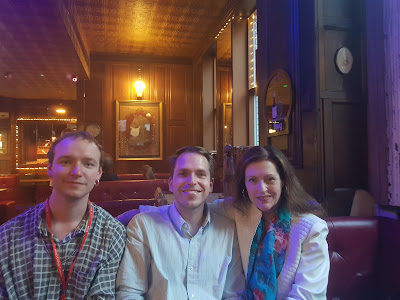
Then I made an emotional return to my mentees at King’s College London, my relationship with whom no Management berserkers can destroy. I spoke to introduce their wonderful Plague at Thebes, an Antigone/Oedipus fusion performed as the KCL Greek play. Marcus Bell and David Bullen: you gentlemen rock.


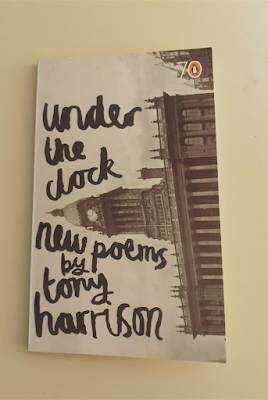
Deftly locating a train during the week of a strike I wholly support, despite Mike Lynch of the RMT rhetorically picking on Classics as an example of an education that does not prepare one for running a nation's infrastructure, I got back to Durham in time to talk about Tony Harrison’s brilliant poetic responses to fragmentary papyrus texts, especially in his personal Ars Poetica, ‘Reading the Rolls’, in this volume.


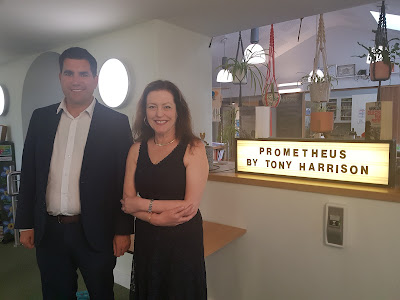
Continuing the Harrison theme, I then went to Leeds to introduce a screening of Harrison’s movie Prometheus organized by stalwart Labour MP for Leeds East, Richard Burgon. It is a joy to find someone with a Leeds accent who knows as much of Harrison off by heart as I do. We visited the poet’s childhood home and the cemetery where his most famous poem, ‘v.’, is set.


I feel exhausted as I write. The next words were in Durham Cathedral after I was deeply honoured to receive an Honorary Doctorate from the Chancellor, Sir Thomas Allen, a local lad who became an opera singer and inspired Lee Hall’s Billy Elliott. I used the occasion to pay tribute to the wonderful Professor Peter Rhodes, who served as Professor of Ancient History in the Department for decades before his recent sad death. He was a beacon of human decency at a time when it is hard to locate anywhere in public life.


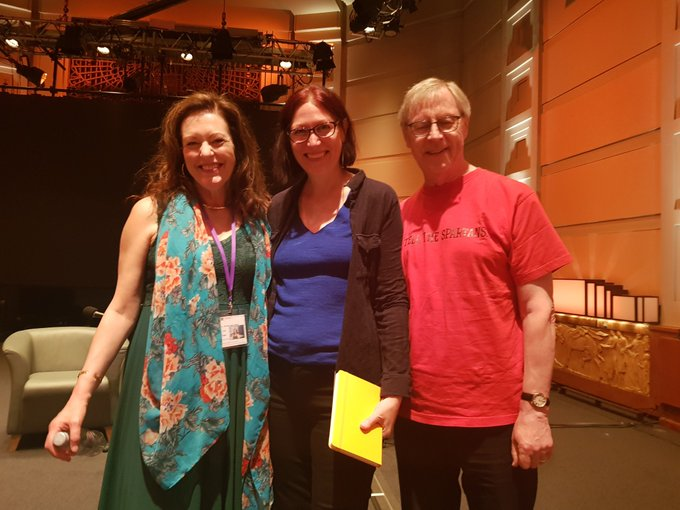
Then, last night, I talked about the athletic, brutal, dancing, Artemis-loving women of ancient Sparta at the recording of the incomparable Nat Haynes’ latest episode of her radio show where she Stands Up for the Classics. My friend over 45 years Paul Cartledge coruscated as much as she did; she also summarized the Odyssey in 28 minutes flat and with sidesplitting humour. I’ll let you know when it is being broadcast.


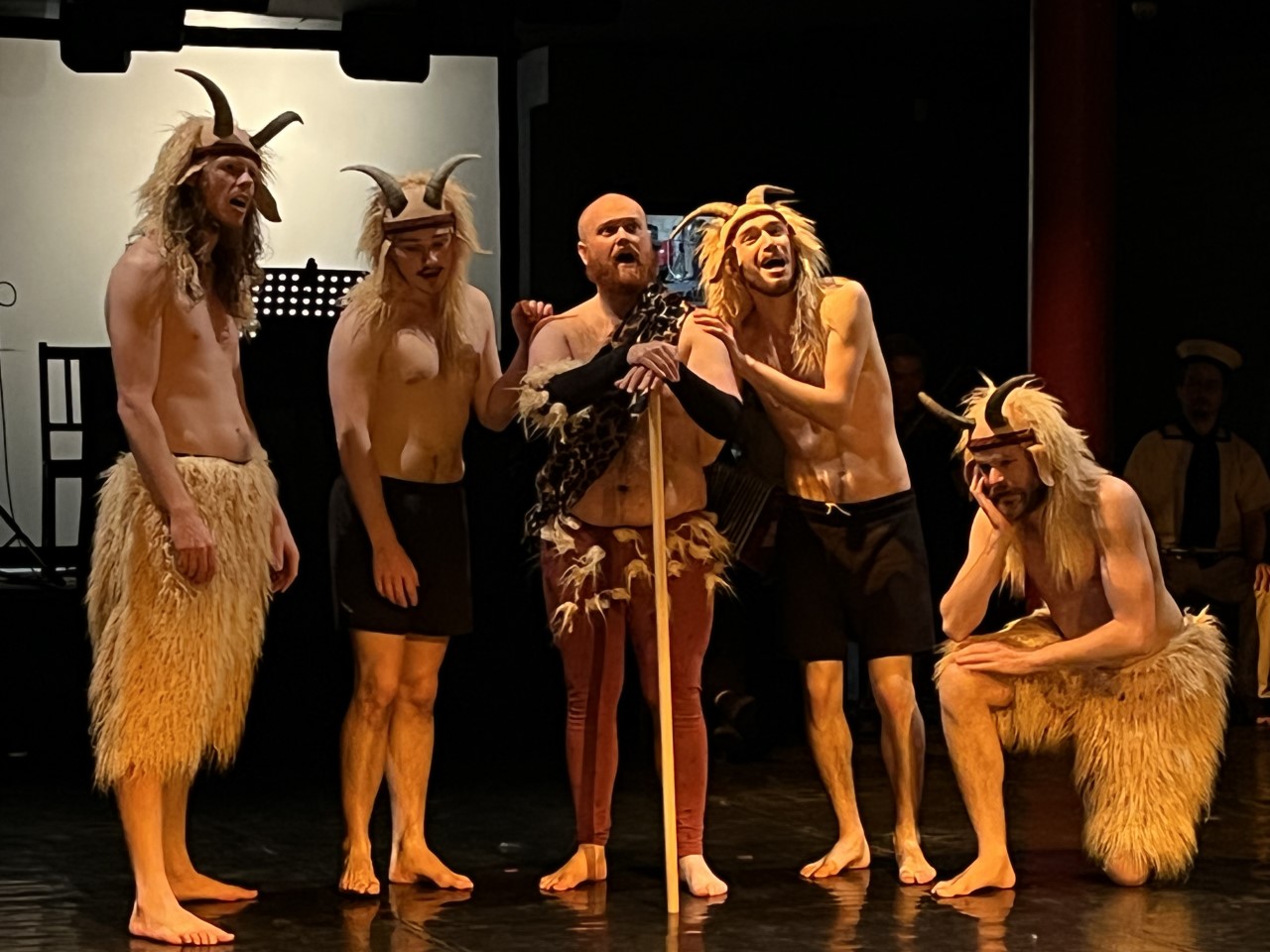
I’m off to the Isle of Dogs to talk about satyr plays after a rare performance by Thiasos Theatre of Euripides’ Cyclops on Saturday afternoon. There are still a few tickets left. A good use of a summer Saturday afternoon. But right now I’ve exhausted myself merely putting this on record and will be catching up on Eastenders with a large pot of tea.


Saturday, 11 June 2022

(Not) A Postcard from 7-Gated Thebes

Thebes in Greek tragedy comes over as a deeply provincial if prosperous inland city, far from the sea, run by a couple of reactionary elite families who endlessly interbreed and are averse to change. Thebes today, when I visited on Wednesday, seems at least psychologically not to have changed very much. 

What we Expected?
One is greeted at the railway station by what my companion Dr Magdalena Zira told me were remarkably aggressive graffiti telling the viewer to go home or else. We were then assaulted by a very young girl begging importunately with a tiny baby in her arms. Creepy, to say the least.


Despite the magnificent new Archaeological Museum, packed with amazing artefacts such as these funeral chests painted with heartbreaking scenes of bereaved women, tourism has never taken off. There is no possibility of purchasing a postcard even at the Museum, let alone a kiosk: “no call for it, Madam”. 


The streets are named after the (very few) famous Thebans in history, including the peerless poet of sycophantic odes for plutocratic and tyrannical overlords, Pindar. Others take the names familiar from Greek tragedy—Polynices Street, Eteocles Street. 


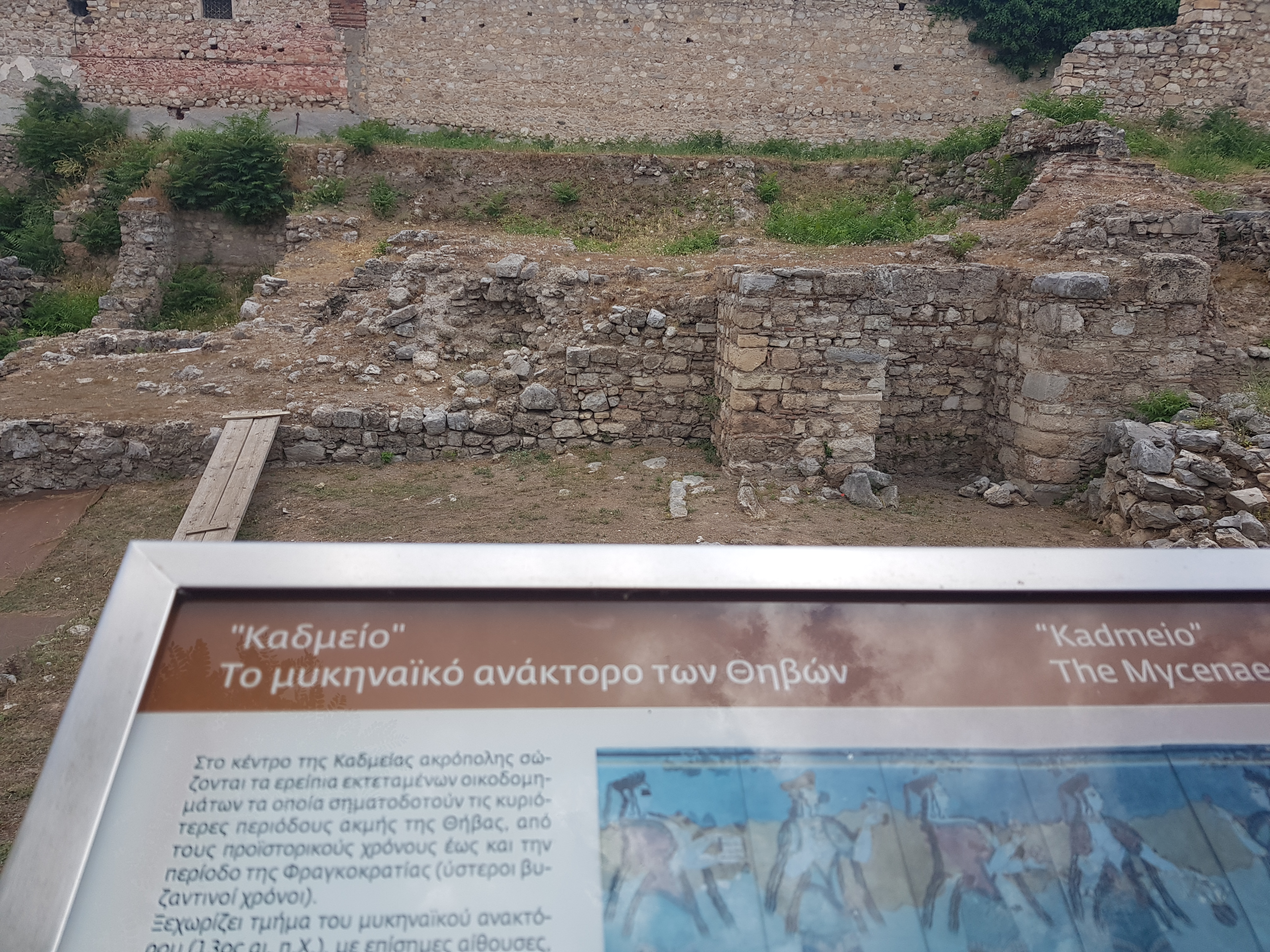
But the venues immortalized in Greek tragedy are meagre and overgrown piles of rubble. The palace which Dionysus rocked with an earthquake in Euripides’ Bacchae seems never to have recovered, although the stories dramatized in Sophocles’ Oedipus and Antigone and Euripides’ Phoenician Women all require sets portraying the magnificent palace of Cadmus, rebuilt after the Bacchae earthquake. 

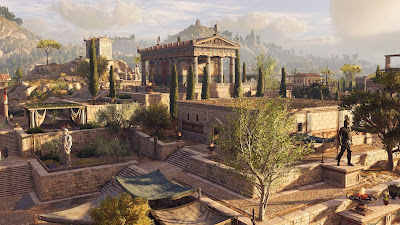
The Palace of Pentheus, Oedipus, Creon...


It is hard to imagine the blinded Oedipus or the fulminating Antigone or the lamenting Creon appearing outside this rubbish tip, although the taxi rank there is named after Cadmus.

Kadmos Taxis and Poseidon Logistics


The wall with 7 gates which provides the setting of Aeschylus’ Seven against Thebes has entirely gone, except for the base of one turret of the Dircean gate, which Capaneus was scaling with a shield hubristically inscribed "I will burn this city" when he was blasted by Zeus with a thunderbolt. 


 The most evocative site is the remains of the peak from which Tiresias the prophet scrutinized the flight of birds outside the temple of Apollo Ismenios. There are about four bits of Doric pillar to be seen. Nobody else was at this hugely important site except one of the two men named Sakis we met (we met a total of 3). 

Tiresias Woz Here


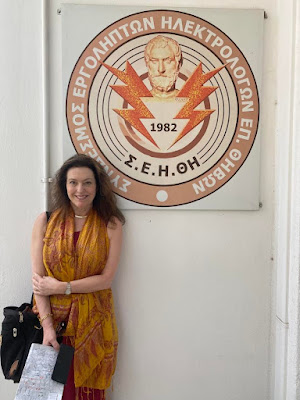
Nor do they care about their pre-Christian heritage. The Electricians' Union Theban Branch office displays a picture of Aristotle inscribed (in tiny writing under top right flame) confusingly with the name of an earlier natural scientist, Thales. Once you've seen one ancient Greek egghead, you've presumably seen them all.


I am a supporter of all things Greek and wonder why they don’t help their economy by exploiting the incredible touristic potential of places like Thebes. Any one of these sites or artefacts would be enough to prompt a Theme Park in the UK. But the Thebans say they like things just the way they are. And have always been.


Friday, 3 June 2022

What's the Point of Universities (e.g. Roehampton)?


On Wednesday I spoke as a ‘specialist witness’ (20 minutes in) on the BBC Radio 4 The Moral Maze, which was asking What is the Point of  University? The programme claims to think about the moral dimensions of pressing issues, but got stuck in the minutiae of current policy.


I’d been gardening between thunderstorms in Durham, and arrived in muddy jeans to have my secateurs confiscated by the Bush House security. But that gardening is important. I’m fortunate enough to enjoy my job, unlike the staggering 37% of working British adults who said in a recent YouGov poll that their job is pointless and not making a meaningful contribution to the world. 

But I still work to live rather than live to work, and the rich humanist education I enjoyed, entirely financed by the British taxpayer, helped equip me for my idea of "real life"--currently citizenship, researching deforestation, garden rescue and selection of TV programmes.

The Evidence

Many people contacted me  to thank me for pointing out the Elephant in the Studio: the commercialisation of our universities is implicated in all their current problems, including grade inflation, decreasing working-class applications, ‘cancel culture’ and the young adult mental health crisis. It has also fuelled the New Philistinism, and encouraged a moronic management class who understand nothing about the true role of education in any half-way decent society. 

One such management is now threatening with mass redundancies the entire brilliant, innovative Classics Department at Roehampton, which in its short and immensely socially responsible life has brought the ancient Greeks and Romans to hundreds of people including the neurodiverse who could never have accessed it otherwise (please sign the petition: link here).


Aristotle notes that Sparta never flourishes in times of peace because its constitution, while training the Spartans well for combat, “has not educated them to be able to live in idleness”. Boredom is the enemy not only of peace but of happiness. Harry Allen Overstreet, the inspirational chair of the philosophy department at CUNY from 1911 to 1936, understood that education for recreation is a serious political business: “Recreation is not a secondary concern for a democracy. It is a primary concern, for the kind of recreation a people make for themselves determines the kind of people they become and the kind of society they build.”


Our word “leisure”  comes from the Latin verb licere (to be allowed): leisure is the time when you are free from the requirement to work and are “allowed” to choose how you spend it. The Greek word used by Aristotle, scholÄ“, originally meant time which you could call your own. It gave rise to our word “school,” because the philosophers saw that leisure (among other things) was a precondition of intellectual activity for its own sake. If you are sent down the mine at age 5 for 51 weeks a year and consequently die at the age of 35 you are not going to have much time for expanding your brain.

Yet, we are obsessed with work. We think we are defined by our jobs. When we ask someone what they “do,” we mean what they do to make a living, not whether they spend their leisure hours singing in a choir or visiting medieval castles. The objective of work is usually to sustain our lives biologically, an objective we share with other animals. But the objective of leisure can and should be to sustain other aspects of our lives which make us uniquely human: our souls, our minds, our personal and civic relationships. Leisure is therefore wasted if we do not use it purposively. Education can help us do this.


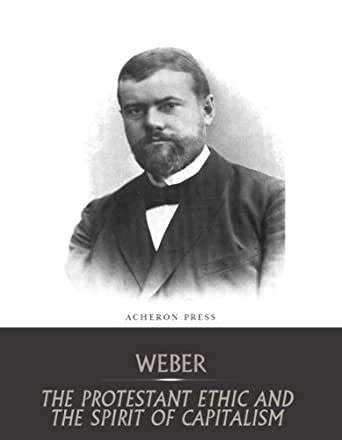
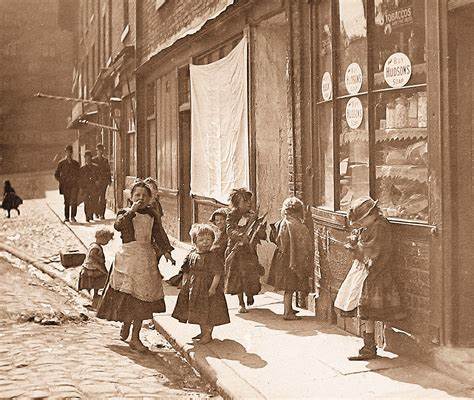
Max Weber showed in The Protestant Ethic and the Spirit of Capitalism (1905) that the work fetish first arose as a result of the Reformation and the Industrial Revolution. It was believed that labour might one day be rendered unnecessary by machines, but only after many centuries of extra- intensive labour. Work geared toward maximizing output of material goods and mindless economic growth consequently acquired a ludicrously high status. The idea of “non- productive” work in spheres like education not strictly necessary for our biological survival, became perceived as less intrinsically valuable than industrial work. Pressure to maximize output meant that working hours stopped being seasonal and became dictated by mechanical timekeeping. They were also massively extended, leading at the peak of the Industrial Revolution to the unending drudgery of the residents of Coketown, as portrayed in Charles Dickens’ Hard Times (1854), and to the horrors of twelve-hour working days.


In the same year, Henry Thoreau published Walden, which describes life in a simple log cabin in rural Massachusetts, with plenty of time for reading and reflection. It explores the psychological deprivation inflicted on capitalist society. In the crazed pursuit of superabundant commodities, humankind has forgotten the reason and purpose of life altogether, and has even begun to invent new unnecessary needs in order to justify the disproportionate amount of time spent at work. Thoreau has a profoundly Aristotelian fantasy: every village in New England will one day  subsidize its own Lyceum, full of books, newspapers, learned journals and works of art, and invite wise people to visit and enlighten the local population during their extensive leisure hours.


Thoreau emphasised education as the solution to the “problem” of using leisure constructively. He argued that good use of leisure in an ideal society would be the main goal and objective of education. So it needs to be made available at every level and fun to everyone in society. Call me a crazy utopian if you want. I've been called much worse.

Sunday, 27 March 2022

Why Aristotle on Friendship Matters on Mother's Day


I'm still sad after nearly six years that I have nobody to send flowers to on Mother's Day. My mother, an outstanding gardener and professional flower arranger, always snorted at the quality of the limp Interflora bouquet sent by her third-born. But she would have hated not receving one.

Aristotle was wrong about women's capacity for deliberation and participation in civic life. But he did think women could be effective moral agents. In one passage of his Eudemian Ethics 7, he implies that they are actually superior to men in the important arena of friendship.

Aristotle's discussion of friendship covers all our relationships, whether with blood kin, sexual and romantic partners or friends we have chosen. He is refreshingly clear that people related to you by blood or marriage can be very bad friends, and that non-kin can display perfect friendship. Blood may be thicker than water, but if it malfunctions it kills you.

 Aristotle asks what makes the best kind of love between any two humans. Some people, he says, prefer to receive love than to give it, which makes for unequal relationships. 

But even more important in analysing friendship is the question of how conscious we are of loving someone or being loved by them.

Being loved is something we have no control over; it is accidental to us. We can be loved without knowing it at all (I always think of when someone, whose identity I never confirmed, witnessed and lodged a complaint about me being sexually harassed in 1990 by a famous Professor). But we cannot love without being aware of it.


If you truly love a person, in the most perfect form of friendship, then you don’t even mind if they have no knowledge of your love or of what you would do or have done for them. You do not ask for the recognition offered to mothers on Mother’s Day. You would do anything and everything for that person, regardless of personal sacrifice, and in no expectation of recognition, thanks or gratitude.

Here Aristotle specifically cites women who under certain circumstances allow others to adopt their children. Even more specifically, he cites ‘Andromache in the tragedy of Antiphon’  (Aristotle developed his sophisticated Ethics in tandem with his love of theatre).


This tragedian apparently wrote a play in which Andromache sought to save her baby Astyanax’s life by sending him out of Troy to safety to be adopted and raised by other people, in the full knowledge that her son would never thank her for her altruism.


Aristotle concludes that the wish to be known as having done a friend a favour is actually selfish, for its motive is ‘a desire to receive and not to confer some benefit’, whereas the person who acts with love without requiring even recognition of their agency does it because they want to see the loved person benefit.


Sadly we do not know whether in Antiphon’s lost tragedy Astyanax did in fact grow up safely far away from Troy. I’ve been thinking about it as I watch children, some without any parents, cross eastern European borders from besieged cities in Ukraine. It is unlikely that Antiphon actually exempted poor Astayanax from death, but it is certainly a beautiful idea.

Saturday, 26 February 2022

The Founding Mother of Ukrainian Literature's rousing Identification with Iphigenia

To mark the gravity of current horrors unfolding, a longer blog than usual, on Lesya Ukrainka (1871-1913), the founding mother of Ukrainian literature, and her identification with Euripides’ self-sacrificial Tauric—Crimean—Iphigenia. 


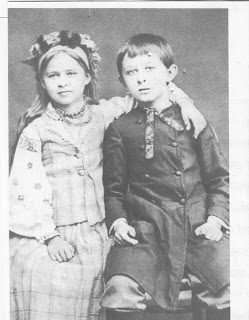
Larysa Kosach, known under the nationalist pseudonym of Lesya Ukrainka, identified profoundly with Iphigenia. This was partly because she knew that the play was set in her own country, and in a part of it near Sevastopol which she had come to know and love. She had celebrated the landscapes of ‘Tauris’ in her poetry collection Crimean Recollections, written between 1890 and 1892 and inspired by the beautiful environment of the Crimean coastline. 


Iphigenia's experience resonated with her own personal sense of being an exile. She had suffered great loneliness when she struggled with the early death, from tuberculosis, of her lover in 1901. 


As a Ukrainian writer, she was in a dangerous position since publishing in her mother tongue was banned by the Russian Empire. As an active opponent of the Tsarist regime, and a Marxist, she was alienated from the prevailing political order; she had been affected, at the age of 9, by the arrest and five-year Siberian exile of her aunt Olena Kosach in a wave of persecution of political activists in St. Petersburg. 


The little girl was motivated to write her first poem, and many of her later works continued to address political themes: the cycle The Songs of the Slaves is a protest against the political subjugation of her fatherland, written around the turn of the century. 


Ukrainka was herself arrested in 1907, when suffering bitter disappointment at the failure of the 1905 revolution. Moreover, as an invalid with acute tuberculosis of the bone, she was forced by her health into long periods of convalescence in warmer climates as well as sanatoria in the Caucasus and Crimea. Already well into her thirties, she had not only endured a great deal of pain, but also felt emotionally, linguistically, culturally and politically isolated. 


It is little wonder that she worked so intensely during this period on her ‘dramatic scene’, Iphigenia in Tauris, which she began in 1903. Her first language was Ukrainian, and much of her work is connected with Ukrainian folklore. But her avant-garde parents had educated her at home, along with her older brother Mykhaylo (she was the second of several children), in Greek and Latin as well as modern European languages. 


Her favourite reading included Homer and Ovid (both of whom she translated), Sappho (about whom she wrote a poem), the Greek tragedians, Shakespeare, Maeterlinck, Mickiewicz, Ibsen, and Heine. Iphigenia in Tauris is the only ancient play she adapted—as a Ukrainian, who had spent time in ‘Taurida’, it would have been an obvious choice. But she takes Catherine the Great’s triumphant appropriation of the myth of the Greek presence in Tauris, and makes Iphigenia a resistant Ukrainian nationalist and radical, committed to struggling for a better world whatever the personal sacrifice. 


Iphigenia in Sevastopol, Roman-style


The oppressive force in Ukrainka’s Tauris is wielded not by the barbarous enemies of Greece and Russia, but by Iphigenia’s captors, by implication the might of Tsarist Russia. 


 In the reception of Euripides’ tragedy, Ukrainka is singularly important, because she brought to the text an unprecedented fusion of classical scholarship and Ukrainian cultural identity. Her chorus are not Greek, as in Euripides, but local women of the town of Parthenizza; the play is set there, according to the detailed stage direction, ‘in front of the temple of Tauridian Artemis. A place on the seashore.’ (Vera Rich’s translation). 


At a deep and subtle level of allegory, Artemis’ light can combat the darkness which the yoke of Russian imperialism has cast over all Ukraine. Iphigenia embarks on an 87-line soliloquy which expresses her innermost thoughts, memories, and suicidal anguish. 


First, her homesickness—she left behind in Argos everything that bestows beauty on human life; family, renown, youth and love. There is an intense feeling that she is deprived of simple physical contact—the cold marble of her temple is no substitute for laying her head on her mother’s breast, to ‘listen to the beating of her heart’, nor for cuddling her little brother Orestes. Achilles, whom she loved sexually, must be in another woman’s arms by now. 


The notorious wintry weather of Ukraine, noted in few adaptations of Iphigenia in Tauris, is turned by pathetic fallacy into an emblem of the frozen desolation in her soul: 


How mournfully these cypresses are rustling! 
The autumn wind... 
And soon the winter wind 
Will roar like a wild beast through all the oak grove, 
The snowstorm sweep swirling across the sea, 
And sea and sky dissolve again to chaos! 
And I shall be beside a meagre fire, 
Feeble and sick in body and in soul; 
While there at home, in distant Argolis, 
Eternal spring will bloom once more with beauty, 
And Argive girls will go out to the woods 
To pick anemones and violets, 
And maybe...in their songs they will remember 
Iphigenia the renowned, who early 
Perished for her native land....


Looking for metaphysical answers to the problem of her suffering, she tells herself not to contend against the supreme powers that rule the earth, nor the god who hurls the thunderbolt. But her inner self is in restless dialogue. Ukrainka opposes the idea that she should meekly accept her god-ordained fate by asserting that Prometheus had given her the courage to offer her life for her country: 


You, O Prometheus, great and unforgotten, 
Gave us our heritage! 
The spark you snatched
From the jealous Olympians for us, 
I feel the flames of it within my soul,-- 
And like a conflagration, unsubmissive, 
That flame of old dried up my girlish tears 
When I went boldly as a sacrifice
For the glory and honour of my Hellas. 


Iphigenia is on the brink of suicide, pressing a sword from the altar to her heart, angrily asking Artemis why she saved her for such a wretched existence. But once again her courageous, enduring self becomes dominant. Suicide would be unworthy, she says, of a descendant of Prometheus: the true sacrifice demanded of her, she now understands, is that she must live in Tauris without people even knowing who she really is: ‘Let it be so’, she quietly concludes, but ‘Bitter is your heritage, O father Prometheus’. 


While this ‘dramatic scene’ is complete as it stands, and concludes with Iphigenia walking resolutely, ‘with even steps’, back into her temple, we do not know whether Ukrainka intended to incorporate it into a longer piece or not. 


It would be good to know if she had meant to include an Orestes, since she was deeply attached to older brother Mykhalo, with whom she shared the political and artistic project of translating great works of literature into Ukrainian—the bible, Gogol, Heine and Byron. In childhood they had been inseparable, and they collaborated on performing dramatic episodes from Greek mythology, ‘in which Mykhalo always assumed the role of the hero, while Lesya was the virtuous maiden or wife’. It is not at all improbable that they enacted the Euripidean play set in their own Ukrainian land, in which brother and sister are reunited. 


As a very young girl, Ukrainka had also organised stagings of both the Iliad and the Odyssey with other little girls in Volhynia, and it would be fascinating to know whether it was the women or the men in those ancient epics in whom she was most interested, since in the cases of the bible and Greek tragedy, her readings were distinctively gendered. In the voices of ancient Greek heroines she found a medium where she could fuse her personal emotional history, her political polemic and a ‘universalising’ mythical referent that transcended the particularities of her own situation. 


She was ‘especially moved’ by the heroine of the Sophoclean Antigone, and the style of the ancient Greek tragedies ‘strongly’ affected her dramatic writing. In her play On the Ruins she tried to inspire her countrymen to great deeds of self-sacrifice through the words of the prophetess Tirsa, who exhorts her fellow Jews to liberate themselves from Babylonian captivity. This strategy is similar to the uses to which she put the Trojan prophetess in her Cassandra


Ukrainka was a communist and a Ukrainian nationalist as well as a feminist. Her Iphigenia in Tauris was designed to stand alone, as an independent performed drama. It has been staged in the Ukraine and in 1921 was used as the libretto by the Kiyiv composer Kyrylo Stetsenko. It's surely time for a revival.